
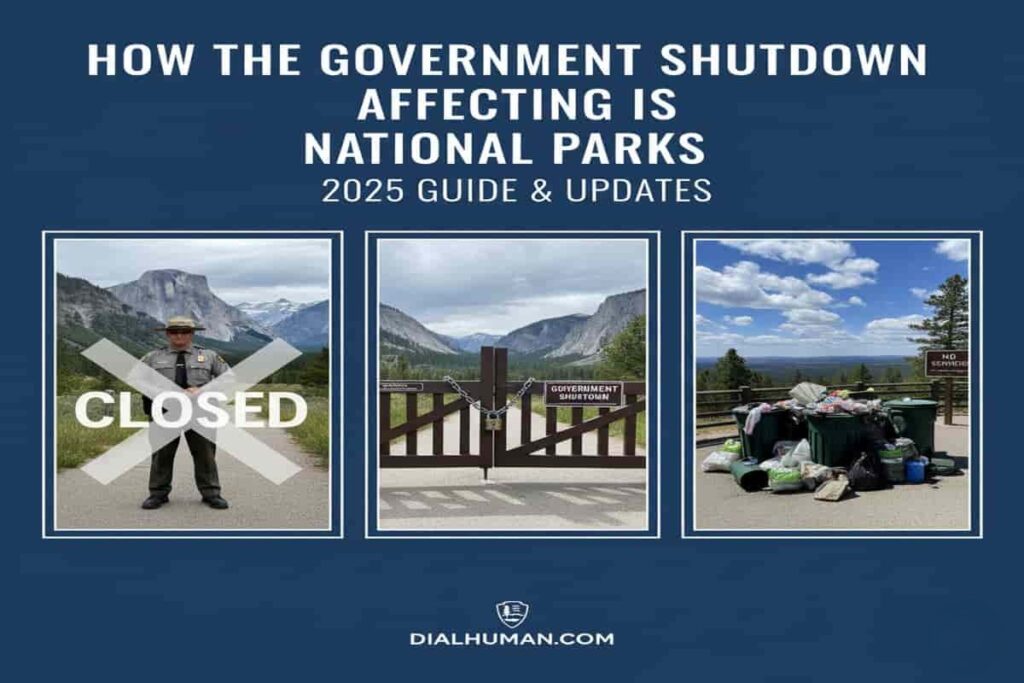
Quick Facts – What Visitors Need to Know Right Now
The U.S. government shutdown has once again thrown the future of national parks into uncertainty. Here is the situation in brief:
- Most parks remain open, but services such as visitor centers, restrooms, and ranger-led programs are closed.
- Staffing is severely reduced: more than half of the National Park Service workforce is on furlough. Only law enforcement and essential emergency personnel are active.
- Maintenance and sanitation are paused, which means overflowing trash bins and locked restrooms in many high-traffic areas.
- Reservations may not be honored: Campground and tour bookings made through Recreation.gov are disrupted. Refunds could be delayed until after funding is restored.
- Safety concerns are real: With fewer rangers, visitors should expect longer response times in emergencies.
- No official updates from parks: Park websites and social media accounts are not maintained during a funding lapse.
In short, travelers can still walk the trails of Yosemite, gaze across the Grand Canyon, or watch geysers erupt in Yellowstone, but they’ll need to be self-reliant and prepared for limited support.
Why the Government Shutdown Impacts National Parks
What is a government shutdown?
When Congress fails to pass funding legislation, federal agencies lose the legal authority to spend money. For the National Park Service (NPS), which manages more than 400 sites across the country, this means daily operations grind to a halt. Rangers, maintenance staff, and visitor services are furloughed, leaving only a skeleton crew of essential workers.
The National Park Service and federal funding
NPS depends almost entirely on federal appropriations. Entrance fees and concessions provide some revenue, but they cannot be spent without congressional authorization. That’s why even seemingly self-sustaining parks shut down or reduce services during a budget lapse.
Past shutdowns and lessons learned
The 2013 shutdown
In 2013, the Obama administration closed nearly all parks outright. Gates were locked, access was restricted, and millions of visitors were turned away. Gateway communities lost hundreds of millions in tourism dollars. The backlash was intense, leading to calls for more flexible policies.
The 2018–19 shutdown
In contrast, during the Trump-era shutdown, the administration opted to keep parks “open” without staff. Visitors poured into Yosemite, Joshua Tree, and other destinations. With no rangers on duty, trash piled up, bathrooms overflowed, and vandals cut down protected Joshua trees. The lesson: open gates without oversight can cause lasting harm.
The 2025 shutdown
This year, the Interior Department has chosen a middle path. Parks remain “generally open,” but most facilities are closed. The approach aims to balance public access with resource protection, though risks remain.
A timeline graphic comparing 2013, 2018–19, and 2025 would show how policies have shifted — and the consequences of each approach.
National Parks Status During the 2025 Shutdown
The NPS contingency plan
The Department of the Interior’s contingency memo outlines the shutdown rules:
- Essential staff only: law enforcement, emergency medical, fire management, and security.
- Visitor services suspended: centers, education programs, guided tours, and public communication.
- Websites and social media frozen: only emergency alerts are updated.
- Maintenance halted: trash collection, road repairs, and bathroom cleaning stop.
This means visitors will see parks in an “open but unattended” state.
Park-by-Park Status (Selected Highlights)
| Park | State | Access | Visitor Centers | Campgrounds | Notes |
| Grand Canyon | AZ | Open | Closed | Limited | Shuttle buses reduced, restrooms closed at popular viewpoints |
| Yellowstone | WY/MT/ID | Open | Closed | Winter ops delayed | Concessioners may scale back services |
| Yosemite | CA | Open | Closed | Closed | No snow plowing on Tioga Road, limited winter prep |
| Acadia | ME | Open | Closed | Limited | Fall foliage season disrupted, local businesses hit hard |
| Statue of Liberty / Ellis Island | NY/NJ | Closed | Closed | N/A | Past precedent: state of New York sometimes funds reopening |
| Shenandoah | VA | Open | Closed | Closed | Fall hikers warned of no emergency response |
| Joshua Tree | CA | Open | Closed | Open (unmaintained) | Risks of vandalism and off-road driving |
| Liberty Bell (Independence Hall) | PA | Closed | Closed | N/A | Indoor access restricted, outdoor viewing only |
Note: Conditions change quickly. Some states may step in with funding to reopen iconic sites, as Utah and Arizona have done in past shutdowns.
Visitor Experience During a Shutdown
Services available vs unavailable
Most outdoor areas — trails, scenic drives, overlooks — remain accessible. But visitors will find locked restrooms, empty ranger stations, and shuttered visitor centers. Trash bins will overflow quickly in popular parks, and no one will be around to manage crowding at trailheads.
Risks and safety concerns
Accidents happen frequently in parks: falls, dehydration, wildlife encounters, and car crashes. With few rangers on duty, response times are longer and outcomes potentially worse. Fires are another risk. In the absence of staff, a single careless campfire can escalate quickly.
Checklist: Should you visit during a shutdown?
- Bring your own supplies: water, food, toilet paper, first aid kit.
- Don’t rely on park staff: assume there are no rangers to guide you.
- Respect locked facilities: entering closed areas is illegal and dangerous.
- Leave no trace: pack out all trash and waste.
Alternatives if your park is impacted
State parks and local preserves are unaffected by the federal shutdown. In many cases, they offer similar landscapes — Maine’s Baxter State Park for Acadia visitors, or Utah’s state parks near Zion and Arches. Museums and cultural centers run by states or private nonprofits are also open as usual.
Economic Impact of the Shutdown on Parks & Communities
Lost revenue for NPS and federal government
The NPS loses millions of dollars daily in entrance fees and concessions revenue during shutdowns. In the 2018–19 lapse, the agency lost over $400 million in just five weeks. That money is never fully recovered.
Impact on gateway towns and small businesses
Communities near parks — often called “gateway towns” — suffer most. Restaurants, hotels, tour operators, and gas stations see sharp declines in visitors. For example:
- Bar Harbor, Maine (gateway to Acadia) depends on autumn leaf-peeping tourism. A shutdown in October is devastating.
- Moab, Utah (near Arches and Canyonlands) relies on fall outdoor tourism. With ranger services halted, outfitters cancel tours.
- Tusayan, Arizona (outside Grand Canyon) faces lower occupancy rates in hotels and reduced restaurant business.
Local/state intervention efforts
In 2013 and 2018, states like Utah, Arizona, and New York stepped in to fund operations temporarily. New York famously reopened the Statue of Liberty using state money. Similar negotiations are underway in 2025, but budgets are tight.
Environmental and Cultural Resource Risks
Damage during past shutdowns
The 2019 shutdown at Joshua Tree is a cautionary tale. Without rangers, vandals cut down iconic Joshua trees to create illegal roads. Trash and human waste piled up in Yosemite and Sequoia. These impacts take years to repair.
Wildlife and resource protection
Unsupervised parks become vulnerable to poaching and illegal hunting. Seasonal monitoring of wildlife is suspended. Sensitive ecosystems, like nesting areas or migration corridors, may suffer irreparable harm.
Historic sites and monuments
Not all parks are wilderness. Many are cultural treasures: Independence Hall, the Liberty Bell, and civil rights landmarks. When they close, education and tourism halt, and heritage access is lost.
Legal and Policy Questions During Shutdown
Who is liable if accidents happen?
If a visitor is injured during the shutdown, they may have little recourse. Park staff are not present, and lawsuits against the federal government are difficult. This raises ethical and legal questions about leaving parks open but unstaffed.
Role of concessionaires and volunteers
Concessionaires may continue operating under contract, but they face liability issues if visitors are harmed. Volunteers often step in to clean bathrooms or collect trash, but without federal oversight, their legal protections are unclear.
Future debates: Should parks stay open during shutdowns?
Advocacy groups like the National Parks Conservation Association argue that partial openings create more harm than good. Some lawmakers have proposed creating a separate funding mechanism for parks to avoid future disruptions. The debate will likely intensify as shutdowns become more frequent.
Travel Advice and Planning During a Shutdown
How to check if your park is open
Because park websites are frozen, travelers must rely on local news, park friends groups, and state tourism offices. Calling nearby hotels or visitor centers can also provide updates.
Reservations, passes, and refunds
Campground reservations made on Recreation.gov may not be honored. Refunds, if offered, are delayed until staff return. Annual passes are not extended for time lost during a shutdown.
Safety checklist before you go
- Check weather forecasts carefully.
- Carry paper maps; GPS and cell service are unreliable.
- Travel with companions if possible.
- Leave an itinerary with someone outside the park.
Alternatives: State parks and private options
Many state park systems (e.g., Colorado, California, New York) offer world-class scenery and full services during federal shutdowns. Private reserves and conservancies also remain open.
Timeline: Shutdowns and National Parks
| Year | Duration | Policy | Impact |
| 2013 | 16 days | Parks closed entirely | $414 million lost in tourism revenue |
| 2018–19 | 35 days | Parks open without staff | Severe vandalism, $400+ million lost |
| 2025 | Ongoing | Parks open with limited services | TBD, gateway towns already reporting losses |
FAQ
Are national parks open during the shutdown?
Yes, but most facilities are closed. Trails and outdoor areas remain accessible.
Will bathrooms and visitor centers be open?
No. Most restrooms, visitor centers, and information desks are closed.
What happens to my camping reservation?
Campgrounds may be closed. Refunds will be processed once the shutdown ends.
Is it safe to visit national parks right now?
Caution is advised. Emergency response is limited, and facilities are unmaintained.
Do rangers still work?
Only essential law enforcement and emergency staff remain. Educational and interpretive rangers are furloughed.
Are state parks affected?
No. State-managed parks remain open with full services.
Sources and Updates
This article is based on the Department of the Interior’s official contingency plan, National Park Service announcements prior to the shutdown, and reporting from major outlets and advocacy organizations. We will update as states announce reopening agreements or as conditions change.